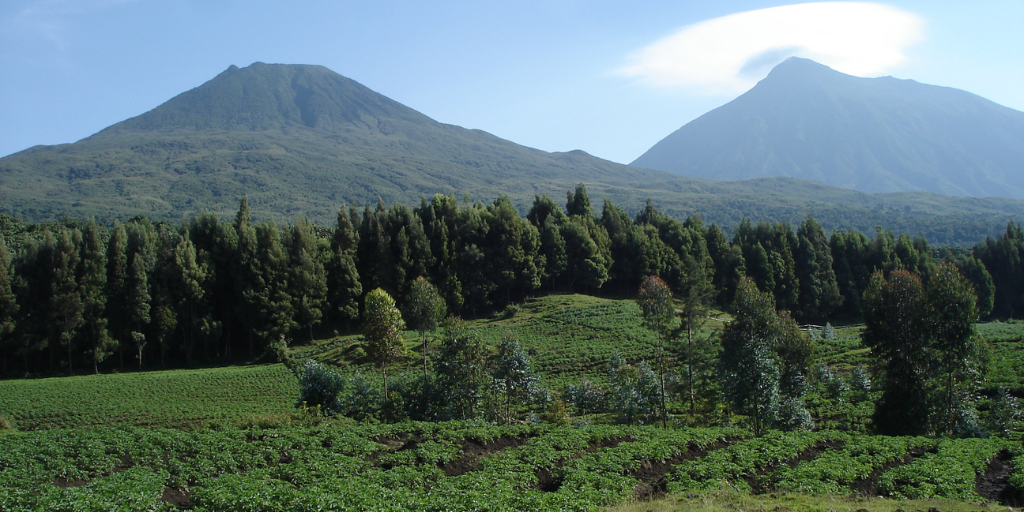
Lasting conservation starts with those who live closest to the land. In Rwanda, three decades of deep partnership—rooted in local leadership, sustained collaboration, and shared benefit—are helping both people and wildlife thrive. Today, mountain gorillas are the only great ape population on the rise, and communities around Volcanoes National Park are reaping the benefits of conservation.
Nearly ten years ago, our Conservation Advisor Eugène Rutagarama—renowned for his role in turning the tide for mountain gorilla conservation—recognized a pressing need: to strengthen the link between conservation success and community well-being. His vision led to a partnership between Wild Earth Allies and the women-led cooperative Imbereheza Gahunga, founded by Athanasie Mukabizimungu.
This collaboration, driven by community priorities and knowledge, addresses two fundamental needs: access to water and access to capital. Imbereheza members identified solutions—household water tanks and a revolving loan fund—that have been transformative.
The following are key lessons from 30 years of work in Rwanda.
Getting the Conditions Right
Insight: Invest in Trust Before Expecting Results
Partnerships flourish when built on mutual respect and long-term commitment.
Wild Earth Allies’ 30-year relationship with Rwandan colleagues has created space for deeper collaboration and impact.

Eugène Rutagarama (left) in discussion with Athanasie Mukabizimungu (right), founder of the community-based cooperative, Imbereheza Gahunga. (Photo: Wellard Makambo)
Insight: Engage Diverse Stakeholders to Widen Support and Impact
Bring together government, NGOs, community members, and other allies to solve shared challenges.
Collaboration with Rwanda’s military in the 1990s supported demining efforts in and around Volcanoes National Park, improving safety for communities and wildlife.

1) Eugène Rugarama (left) and Katie Frohardt (right) with conservation colleagues; 2) Colonel Jean-Marie Kayigamba (now retired) with a landmine during a training session. (Photos circa 1995, K. Frohardt)
Insight: Build Bridges through Conservation
Advocating for wildlife and their values—biological, cultural, and economic—can create common ground and transcend borders, even in times of conflict.
Transboundary collaboration between Rwanda, DRC, and Uganda was key to turning the tide for mountain gorillas.
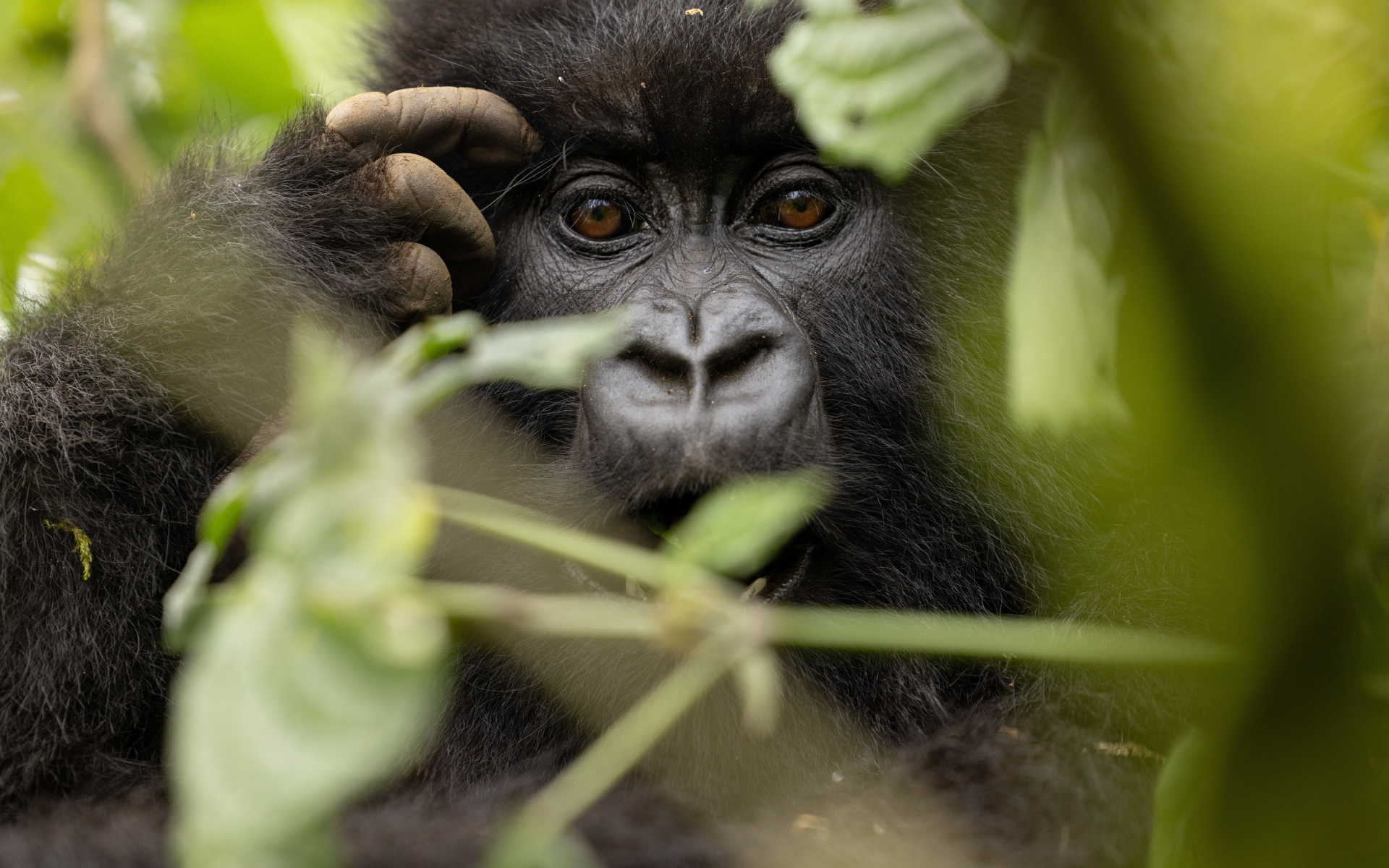
A mountain gorilla in Rwanda’s Volcanoes National Park (Photo: Allison Shelley)
Insight: Adopt Pro-Community Policies
Community-centered policies are key to creating equitable, impactful protected areas.
Rwanda’s revenue-sharing policies have boosted benefits for communities neighboring national parks and opened doors for cooperatives like Imbereheza.

Children run in the foothills of Volcanoes National Park (Photo: K. Frohardt)
Insight: Secure Flexible, Long-Term Financing
Enduring conservation outcomes require funding that adapts to evolving needs and supports both people and wildlife over time.
Sustained investment has helped recover gorilla populations and strengthen community livelihoods.
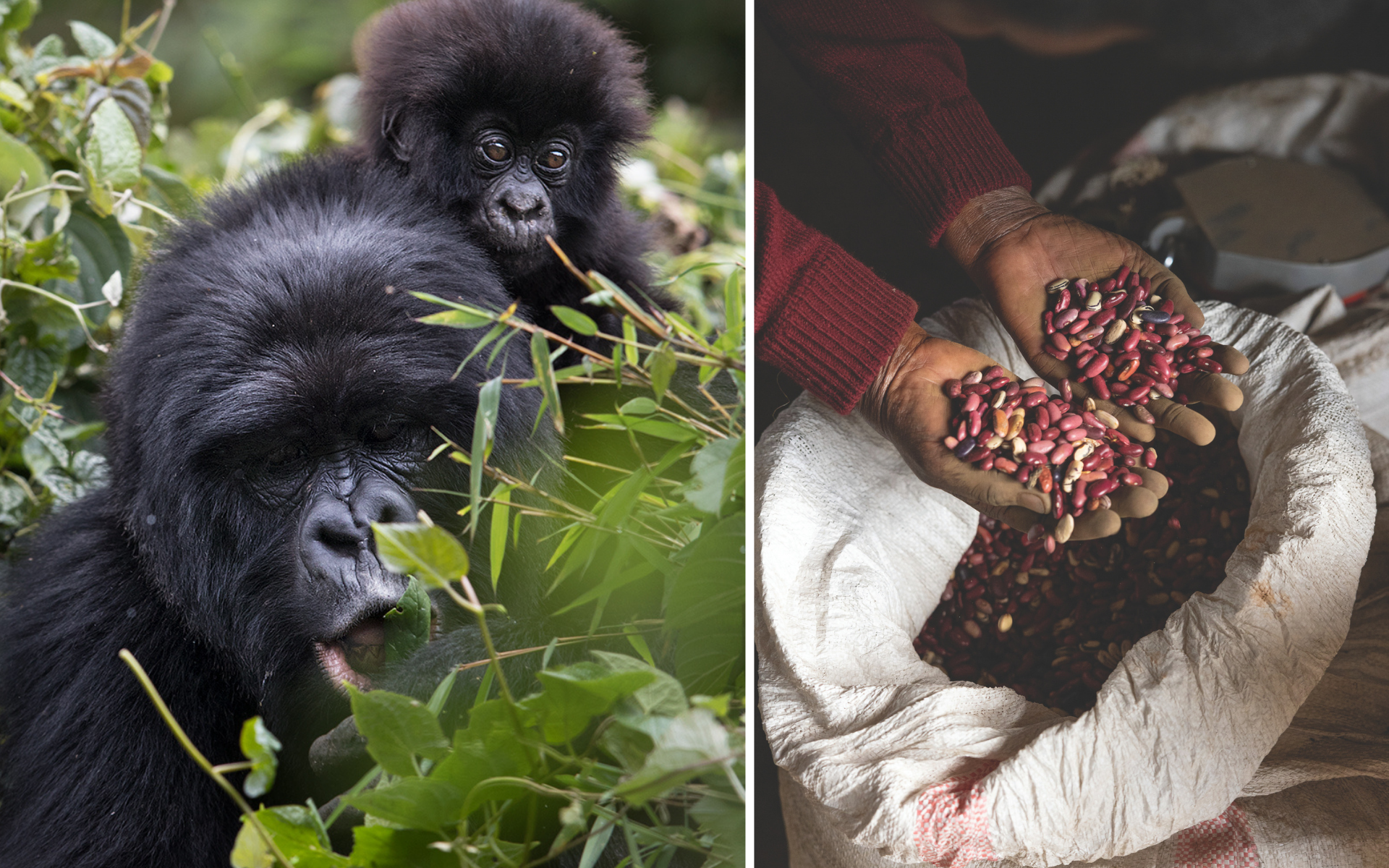
1) Mountain gorillas in Volcanoes National Park (Photo: Eric Sambol) 2) An Imbereheza member reviews some of the seed stores housed at the group’s headquarters building in Gahunga, Rwanda (Photo:Allison Shelley)
Putting Partnership into Practice
Insight: Lead with Local Priorities and Knowledge
Ground conservation in community values, practices, and leadership to ensure solutions are relevant, trusted, and lasting.
Imbereheza’s vision for water tanks and a revolving loan fund came directly from its members.
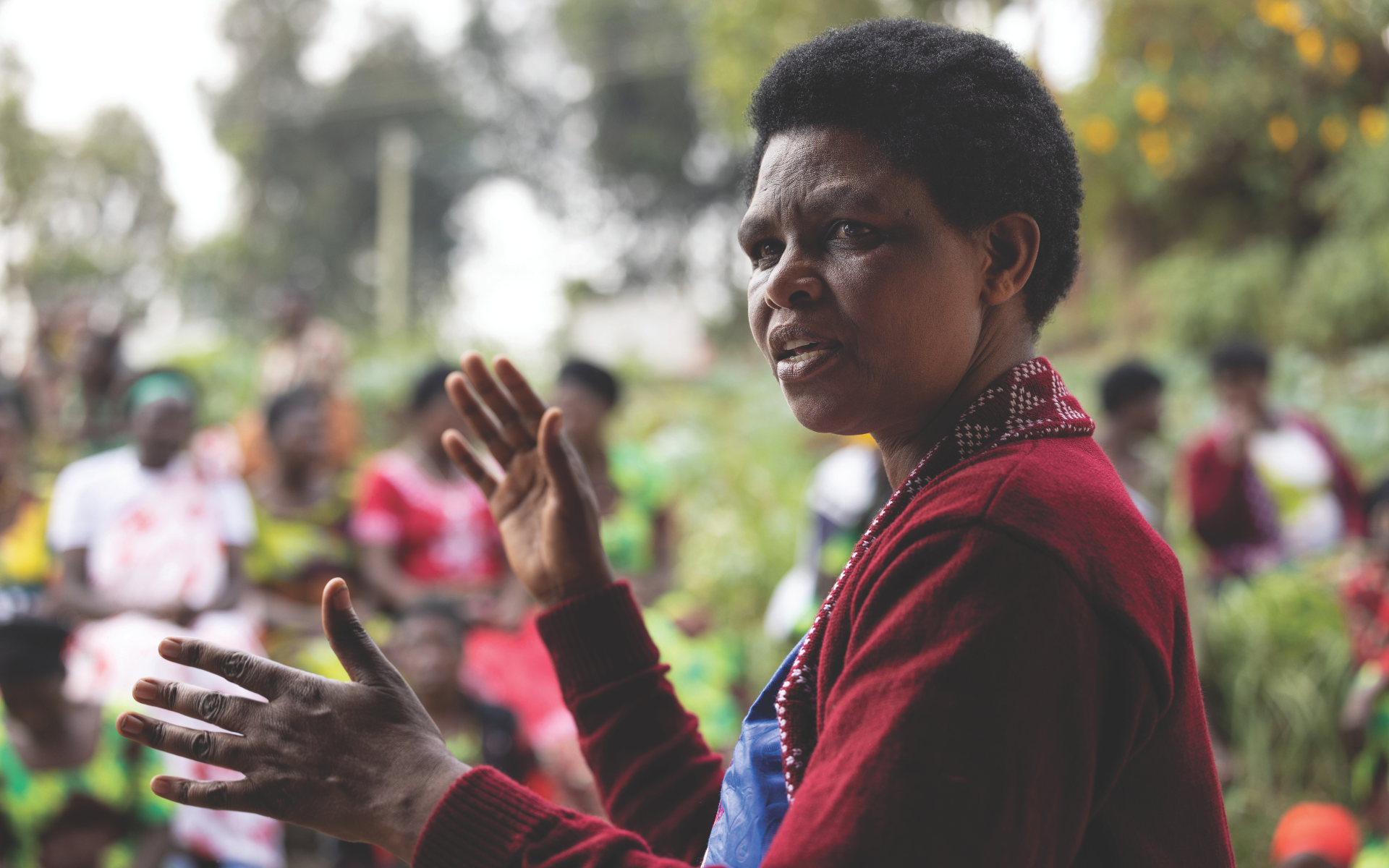
Athanasie Mukabizimungu, Founder of Imbereheza Gahunga (Photo: Allison Shelley)
Insight: Leverage Each Partner’s Strengths
Combine community-driven solutions with the tools, training, and networks to implement them effectively.
Imbereheza identifies local challenges and solutions, and Wild Earth Allies provides technical support, connections, and financing to bring their vision to scale.
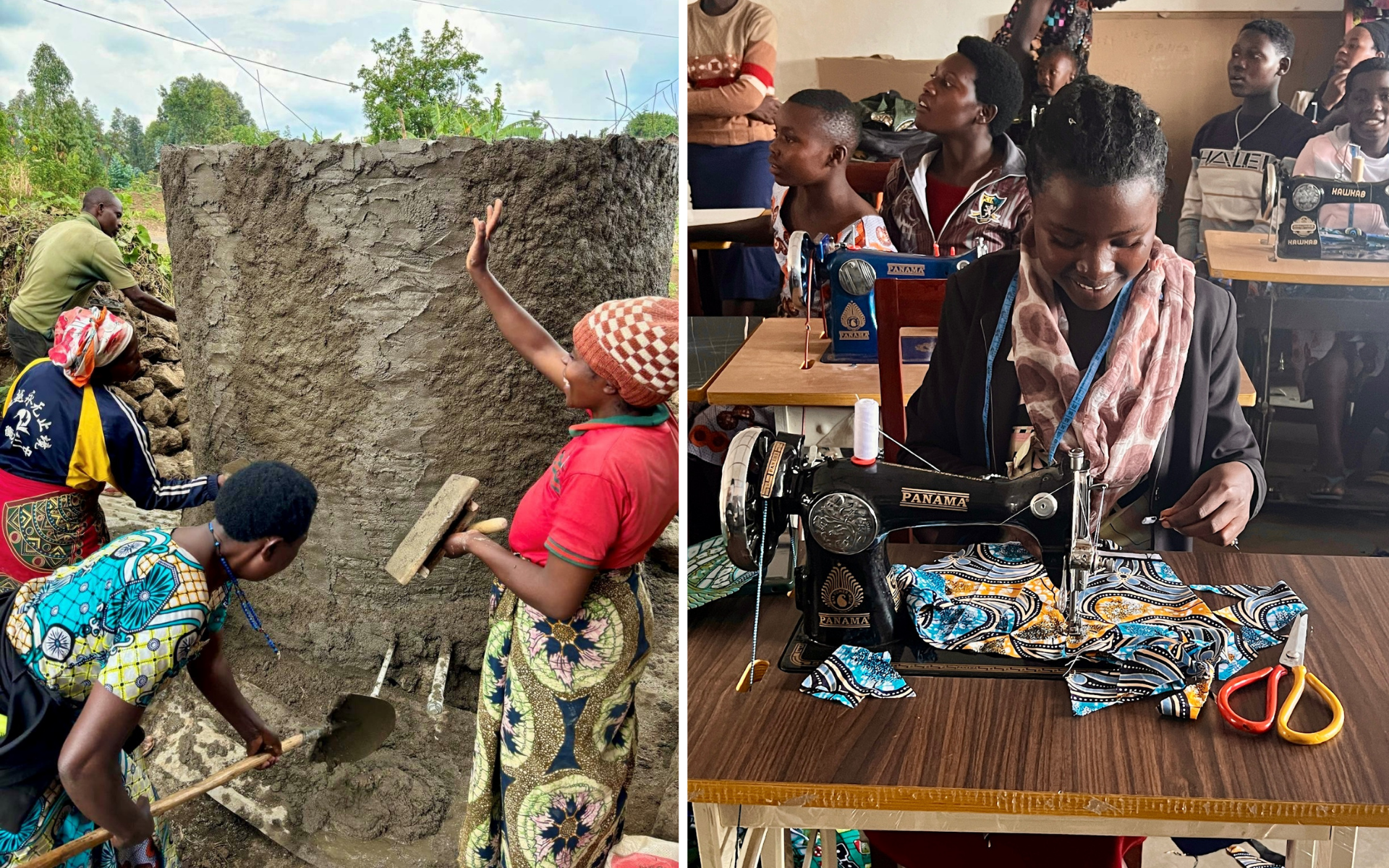
1) Imbereheza members build a water tank; 2) A women earns income through Imbereheza’s sewing program.
Insight: Co-Create Solutions that Meet Both People’s and Nature’s Needs
Link human well-being directly to conservation outcomes to reduce pressures on ecosystems.
Water access improvements freed time for women to pursue livelihoods while easing reliance on park resources.
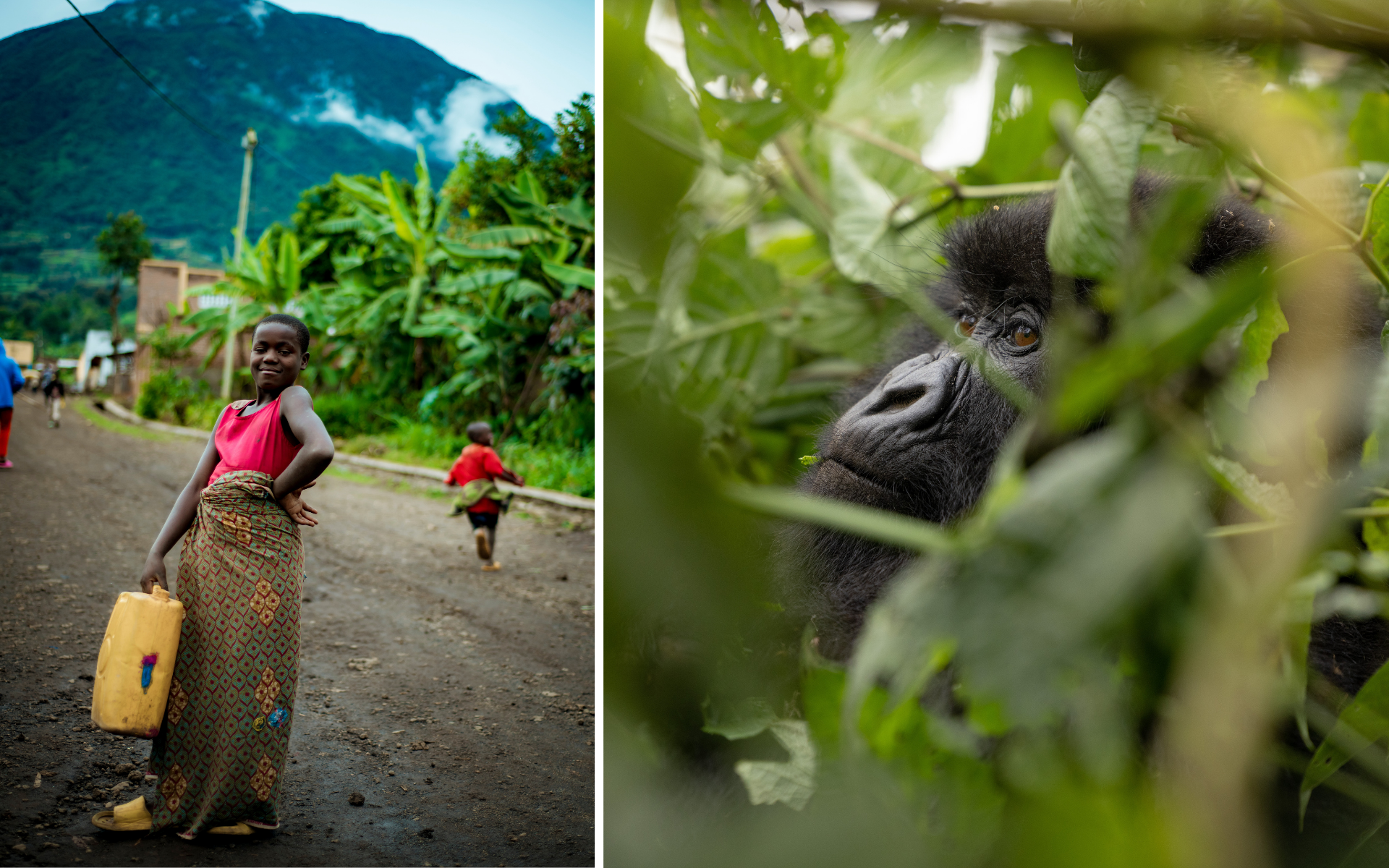
1) A woman walks to the park to collect water (Photo: Primal); A mountain gorilla looks through branches in the park. (Photo: Allison Shelley)
Insight: Build Capacity with the Local Partner’s Vision at the Center
Strengthen governance, management, and infrastructure in ways that align with the community’s priorities.
Investments in Imbereheza facilities, including a kitchen, latrines, and a computer lab, enabled the cooperative to expand its programs.
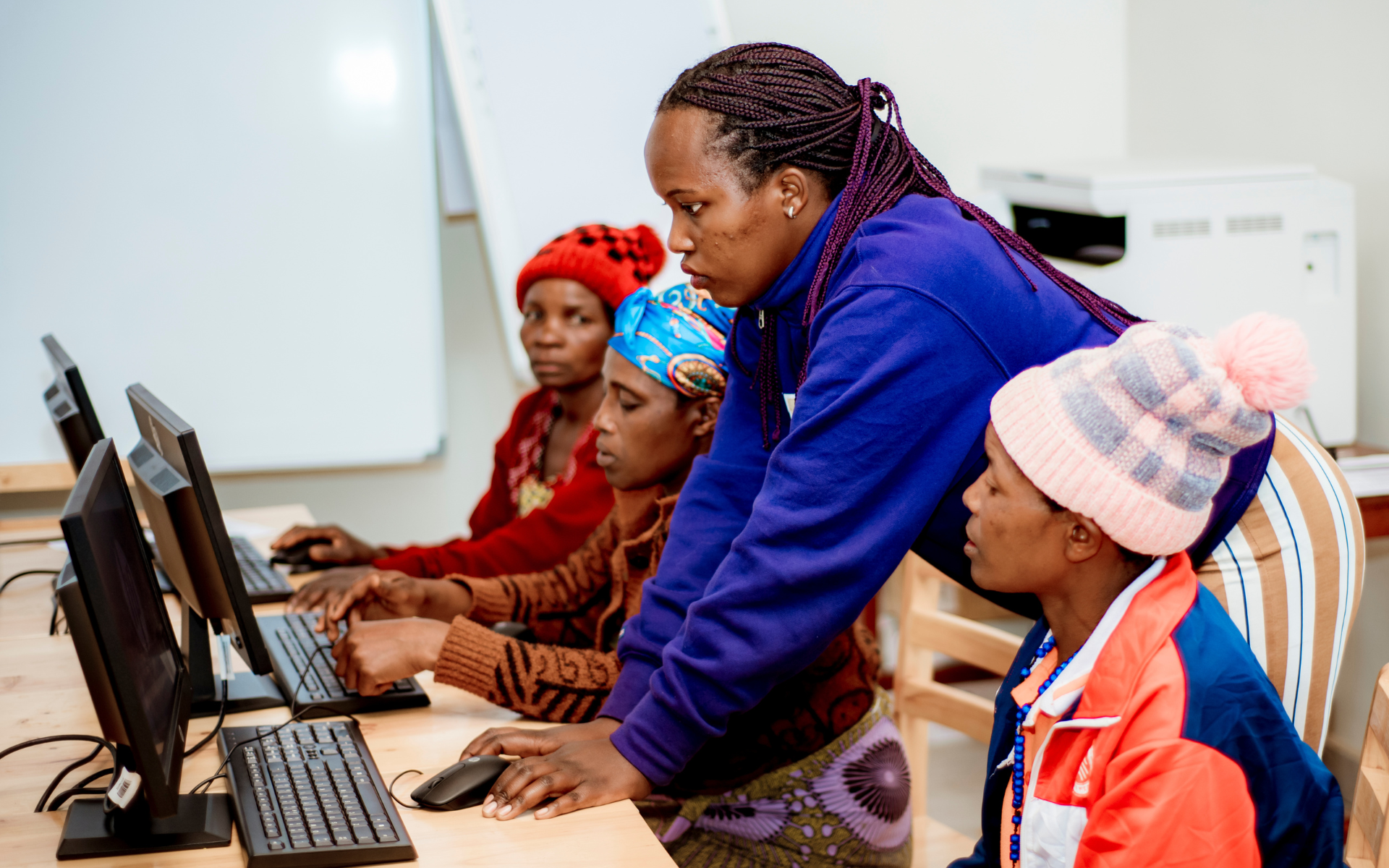
Imbereheza members learn new skills in the cooperative’s computer lab.
Deepening, Scaling, and Replicating Impact
Insight: Adapt Together as Needs and Contexts Change
Remain responsive to shifting environmental, social, and economic conditions.
To keep pace with priority needs, our focus over decades evolved from post-genocide recovery to addressing community needs for long-term water and food security and enterprise growth.
Eugène Rutagarama, Conservation Advisor, and Joelle Rutagarama, Rwanda Program Manager, discuss the history of mountain gorilla conservation in Rwanda and Imbereheza Gahunga’s community-based programs. (Video: DoGoodery)
Insight: Reduce Isolation and Spark Learning through Exchanges
Elevate community-based success across sites to inspire replication, influence policy, and attract investment.
A study tour to meet and share ideas with other community-based cooperatives in Rwanda inspired Imbereheza to design a revolving loan fund.
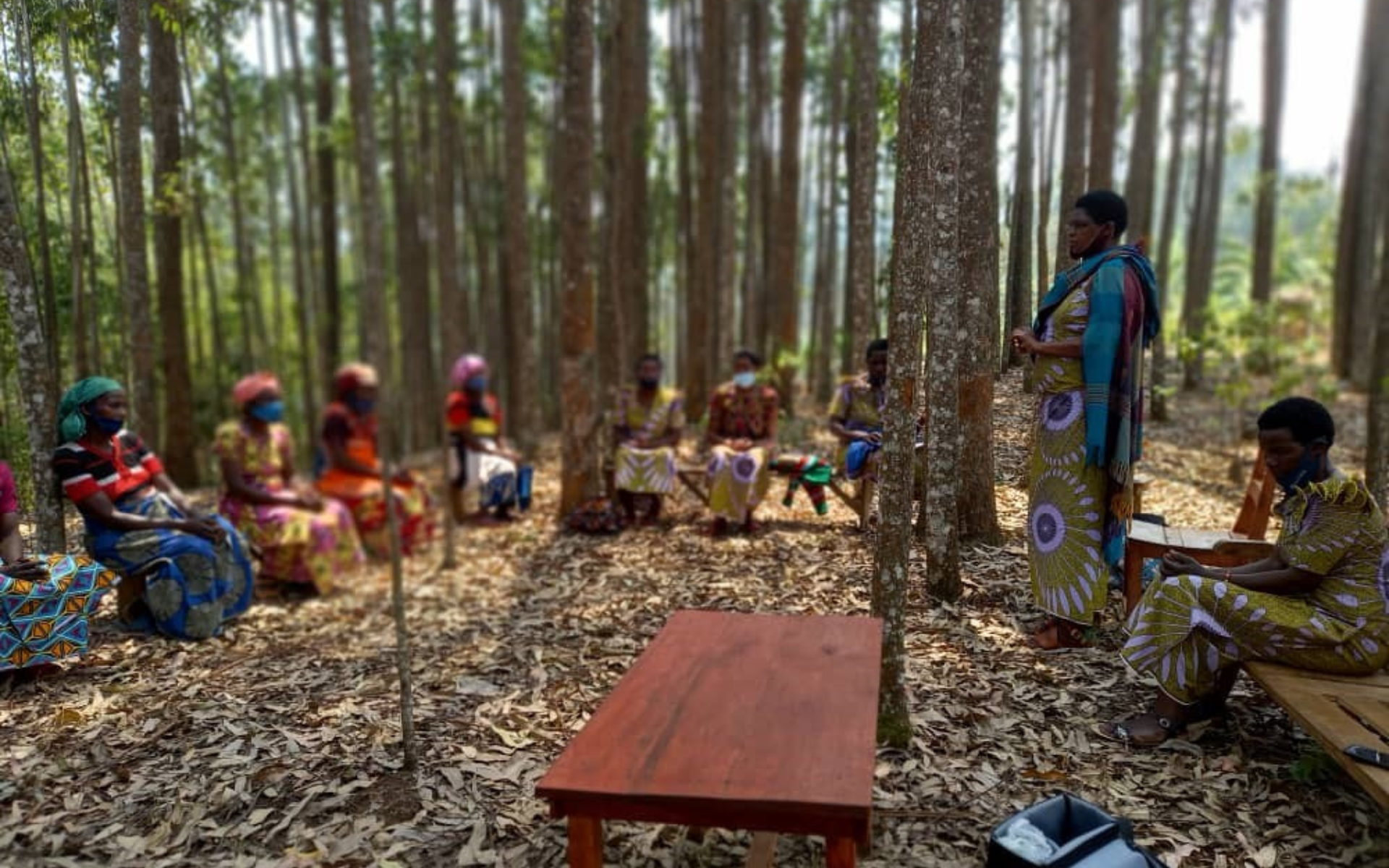
Imbereheza Gahunga members join a study tour in another community.
Insight: Amplify Proven Approaches
Replicate successful practices from mountain gorilla recovery to other sites.
Our partner and primatologist, the late Dr. Augustin K. Basabose, was instrumental in developing ranger-based mountain gorilla monitoring. He founded the Congolese NGO Primate Expertise, and his team is deepening his legacy by extending mountain gorilla success for Grauer’s gorillas.
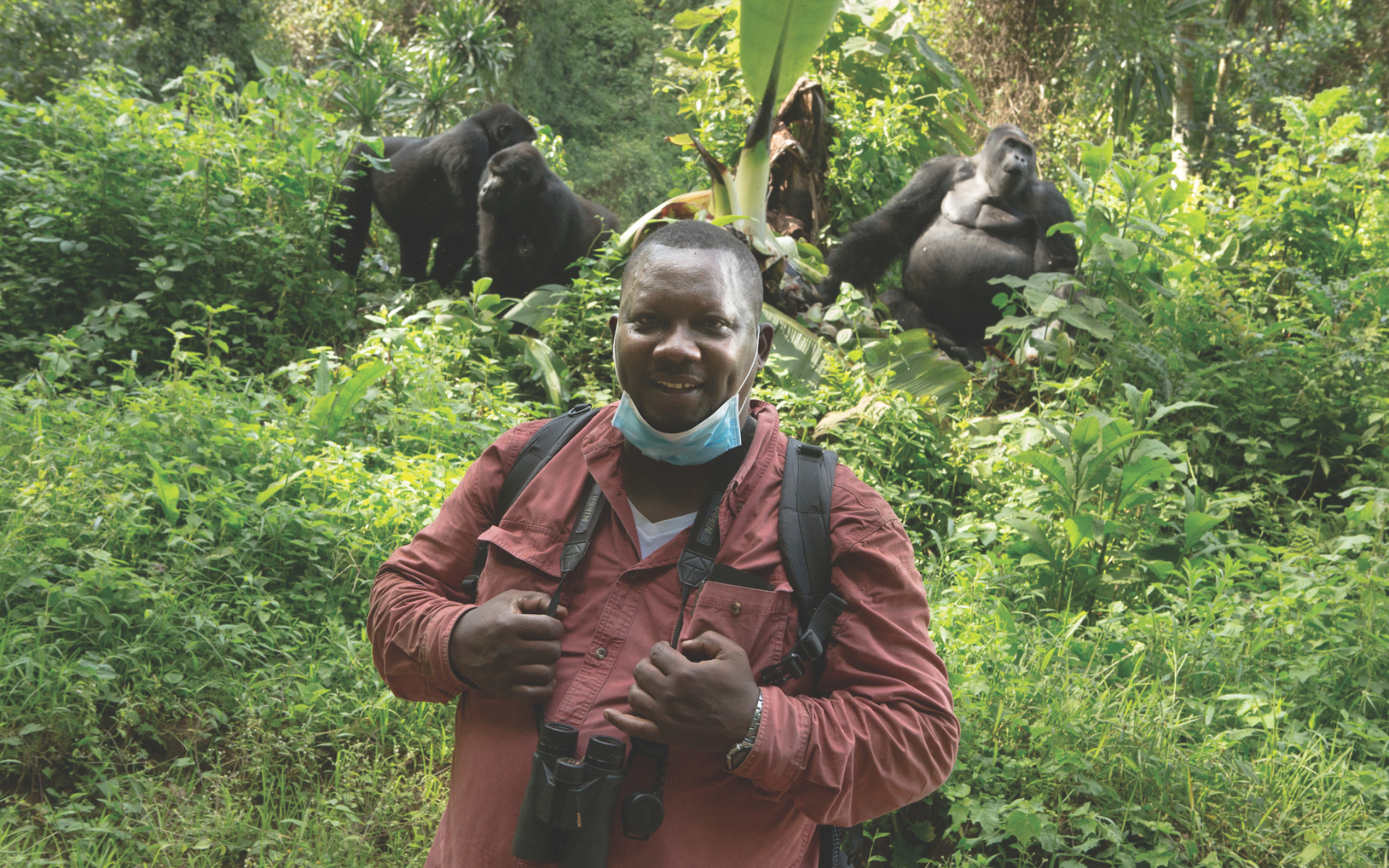
The late Dr. Augustin K. Basabose with Grauer’s gorillas in the DRC’s Kahuzi-Biega National Park (Photo: Allison Shelley)
Insight: Share Learning Across Sites to Spread Effective Practices
Treat each partnership as part of a larger network for co-creating and sharing knowledge.
Lessons from Rwanda inform Wild Earth Allies’ collaborative work in other high-biodiversity areas globally.
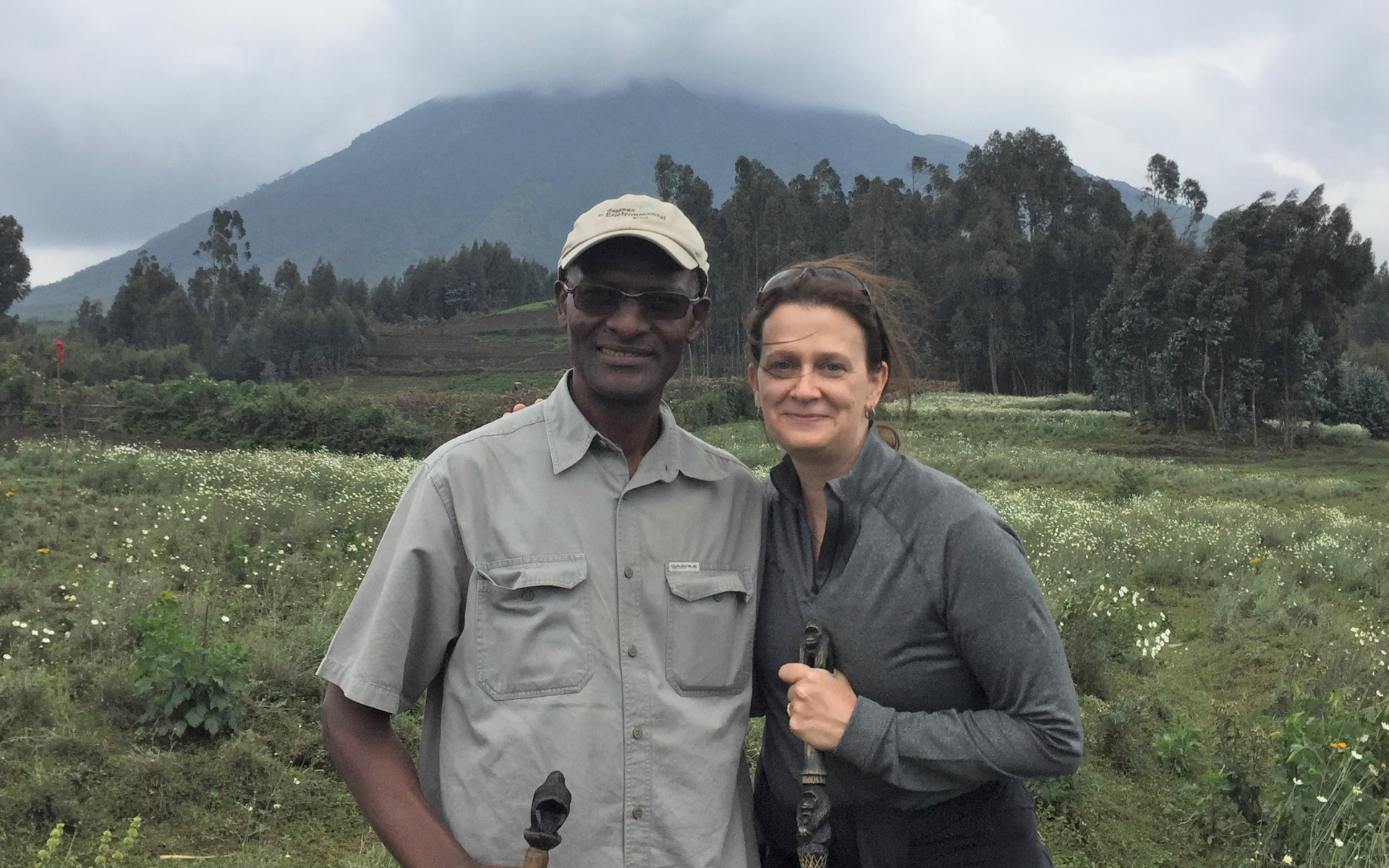
Eugène Rutagarama and Katie Frohardt with Volcanoes National Park in the background.
From our earliest days in Rwanda to today, our work has been grounded in mutual respect, trust, and long-term commitment. These partnerships have shown that community-centered conservation is not just equitable—it is more effective and more enduring.
In our Allied Insights report, we share lessons from 30 years of collaboration that demonstrate what it takes to operate a successful community-partnership model: flexible financing, diverse stakeholder engagement, and unwavering respect for local leadership.
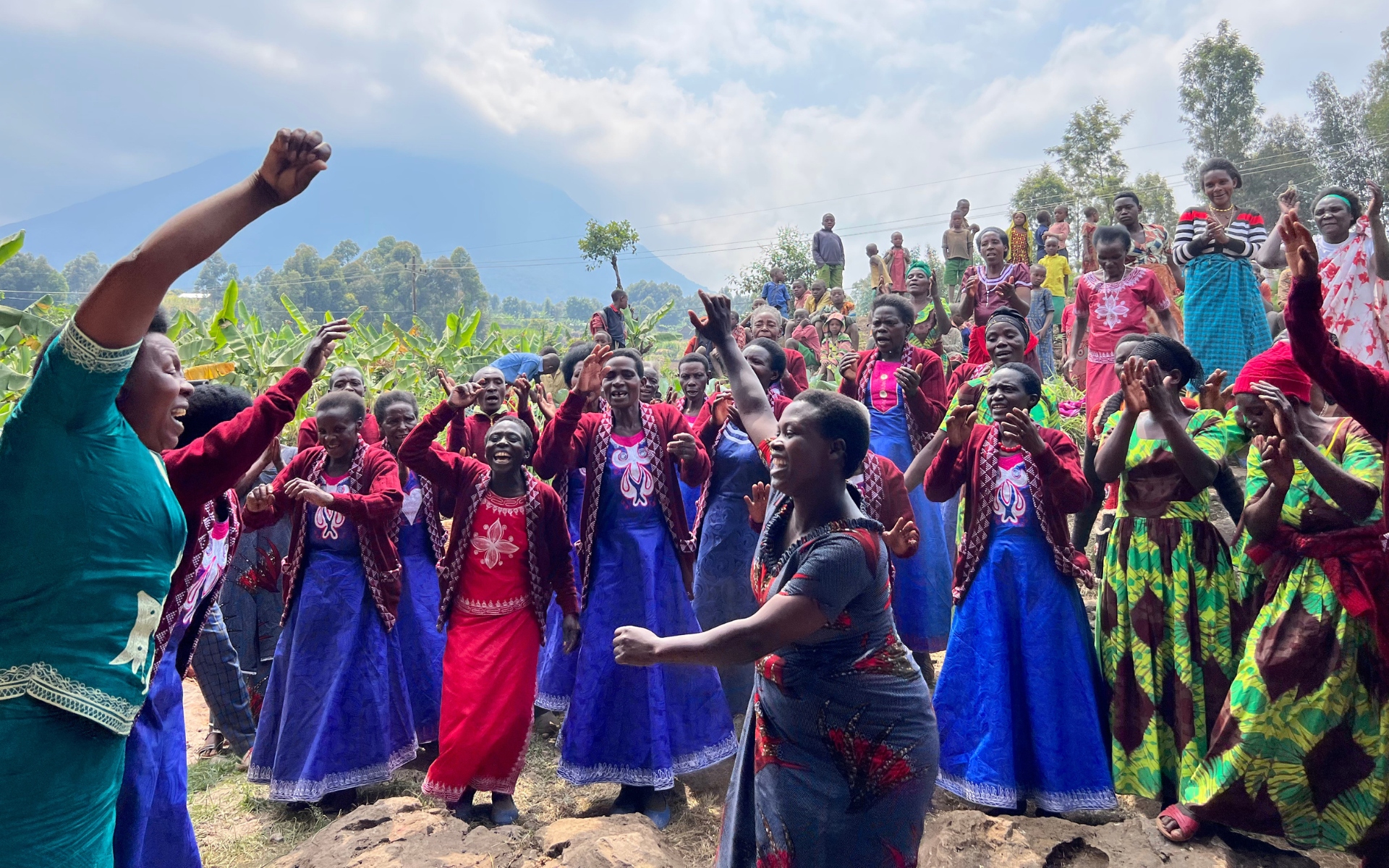
Imbereheza members celebrate their partnershp with Wild Earth Allies.