
Mangroves are vital coastal ecosystems that support marine biodiversity, protect shorelines, and sustain local livelihoods. After decades of decline, new data show the world’s mangrove forests are recovering. But progress is uneven, and some countries are losing mangrove cover because of land-use changes, pollution, and other pressures.
What does it take to restore healthy mangroves over the long term? In Cambodia’s Kep province, one fishing community provides a powerful example.
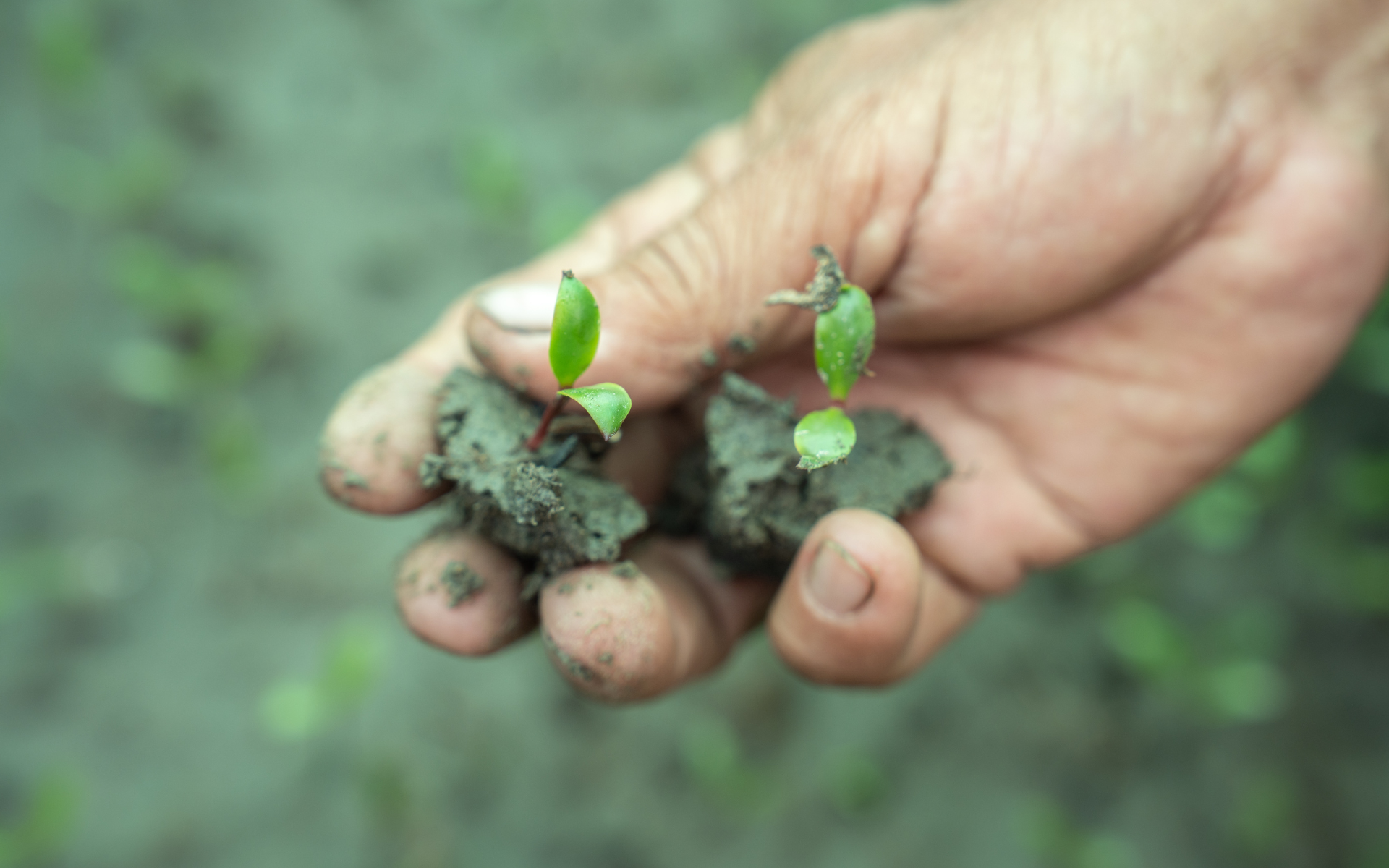
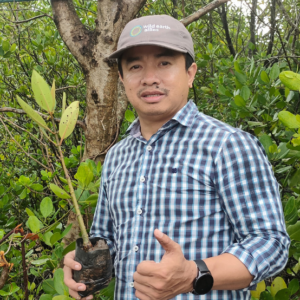
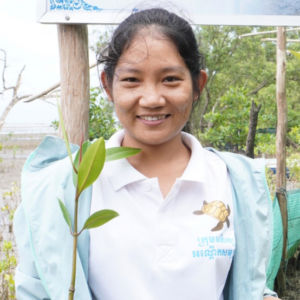
A member of Phum Thmey Community Fishery holds mangrove seedlings.
Restoring Mangrove Diversity, One Seedling at a Time
Community Fisheries are groups of small-scale fishers who work with Cambodia’s General Directorate of Fisheries to manage and protect their local fishing areas. In 2023, members of the Phum Thmey Community Fishery established a beachfront mangrove nursery in partnership with Wild Earth Allies. The community is restoring native mangrove diversity, with a focus on rare species that once thrived in the area.
In 2026 alone, community members germinated 2,020 mangroves representing five species.
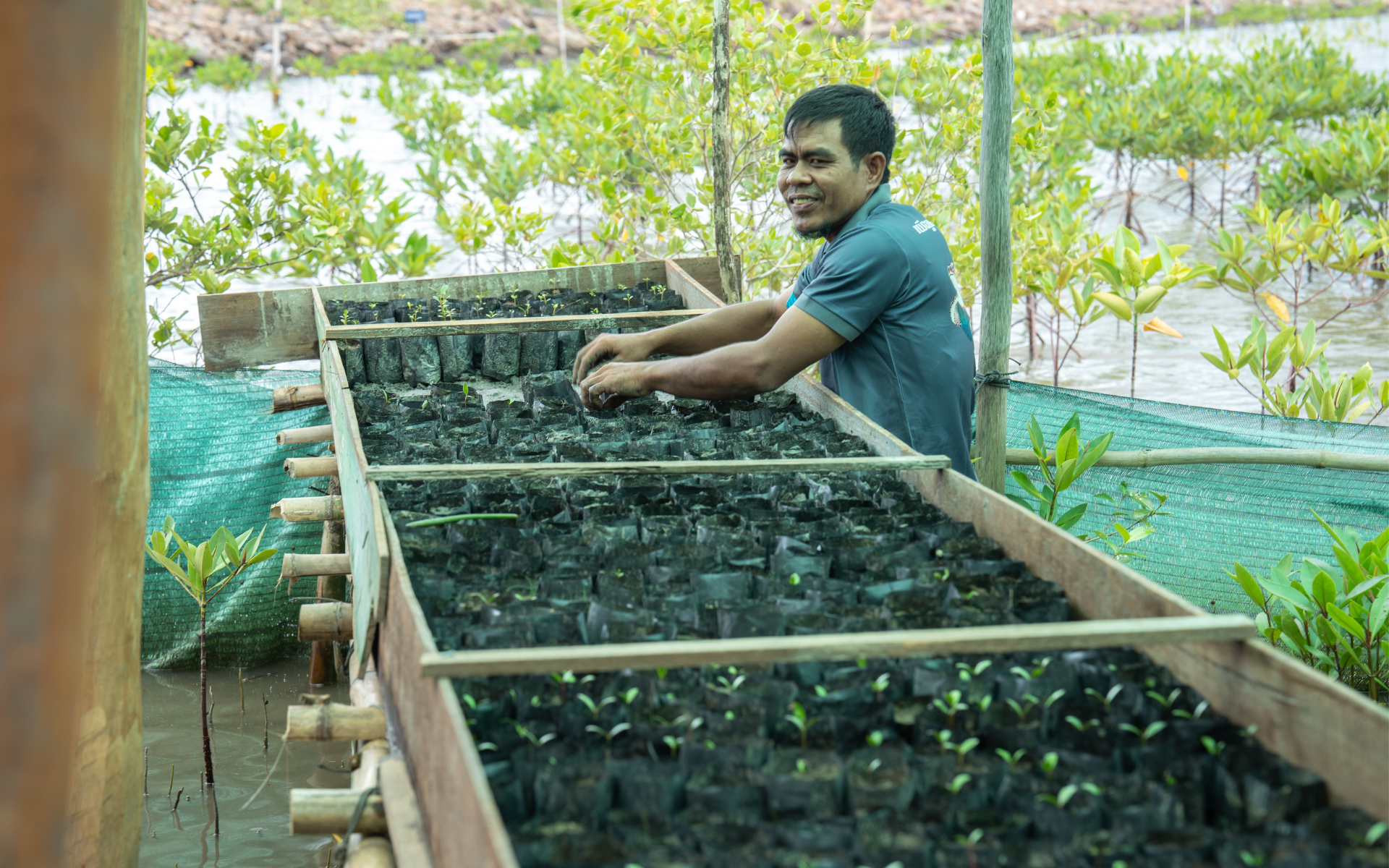
Saleh Layman tends to mangrove seedlings in a raised nursery bed he developed to protect young plants from crabs.
“I wish to see our natural environment restored, so that degraded areas can be transformed into green, thriving spaces.“
— Saleh Layman, Nursey Manager, Phum Thmey Community Fishery
Local Knowledge Guiding Mangrove Restoration
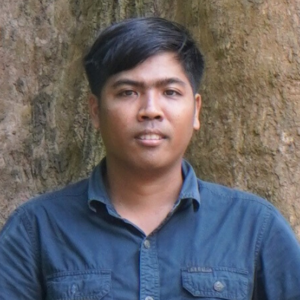
“I wish to see our natural environment restored, so that degraded areas can be transformed into green, thriving spaces. This is why I am dedicated to growing mangroves,” says Saleh Layman, a member of Phum Thmey Community Fishery who manages the nursery.
Saleh’s work goes beyond growing seedlings. He regularly removes trash from the beach and mangrove forest and develops solutions to nursery challenges. When he noticed crabs eating seedlings of Sonneratia ovata, a mangrove species now rare in the area, Saleh began raising the young plants in elevated nursery beds to protect them. Once the seedlings are mature, the community plants them to restore and expand mangrove habitat.
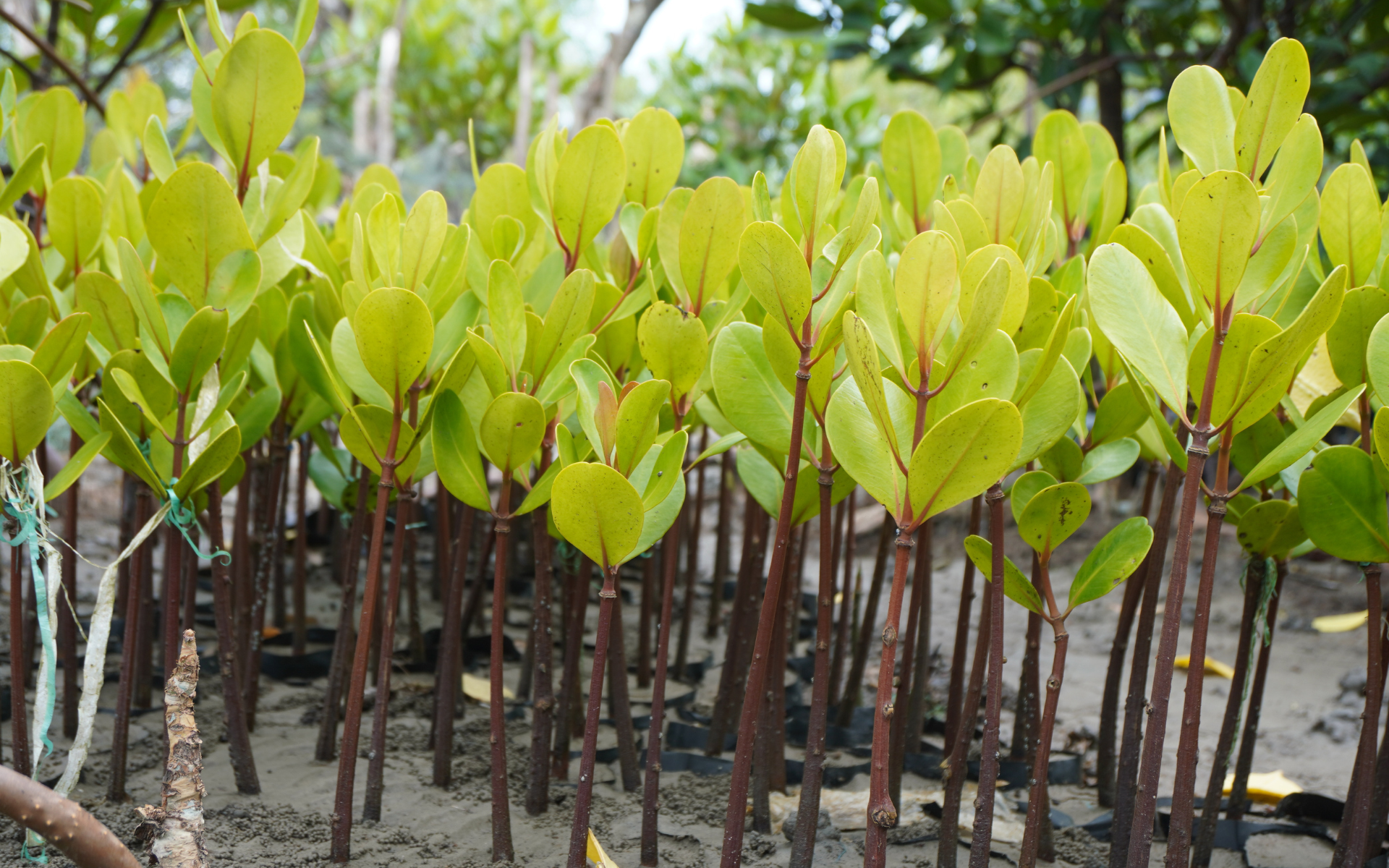
Young mangrove seedlings grow in a nursery at Phum Thmey Community Fishery in Cambodia.
“Mangroves provide shaded areas for people, improve air quality, and serve as habitats for fish and other marine life.“
— Saleh Layman, Nursey Manager, Phum Thmey Community Fishery
Healthy Mangroves, Resilient Communities
“Mangroves provide shaded areas for people, improve air quality, and serve as habitats for fish and other marine life,” Saleh explains. “They also help stabilize eroded riverbanks and act as a natural barrier against storms.”
Beyond these ecological benefits, Phum Thmey Community Fishery generates additional income by selling mangrove seedlings to companies and welcoming visitors to its coastal conservation area. Saleh hopes that continued restoration will create even more opportunities for ecotourism and local livelihoods.

The entrance sign at Phum Thmey Community Fishery’s mangrove nursery in Cambodia’s Kep province.
A Community-Centered Path to Mangrove Recovery
Wild Earth Allies partners with 18 Community Fisheries across Cambodia’s Kampot, Kep, and Preah Sihanouk provinces to protect biodiversity, restore habitats, and strengthen local livelihoods and awareness-raising.
As the world’s mangrove forests show signs of recovery, Phum Thmey offers an important lesson: lasting mangrove conservation depends on native plant diversity, local knowledge, and restoration efforts rooted in the communities whose lives are connected to these coastal ecosystems.
Photo credits: Kimlong Meng and Viphou Meas